See cheek filler before and after over 50, what changes with age, and how Park Aesthetics plans natural-looking midface rejuvenation.


130 Tibet Ave
Suite 105
Savannah, GA 31406
We are located in Tibet Professional Center with plenty of parking available.


Medically reviewed by Lillie Brannen, PA-C
You may notice flatter cheeks, deeper smile lines, or more under-eye hollowing even when you feel well-rested. After 50, those changes often come from shifts in facial volume, skin quality, and midface support.
Cheek filler can help restore lost volume and support, but natural-looking results depend on where the change is coming from. At Park Aesthetics, the plan starts with a whole-face assessment rather than a preset amount of filler.
This guide explains what cheek filler results can look like after 50, how treatment is planned, and when another option may fit.
Your cheeks can look flatter after 50 because facial structure, fat distribution, and skin quality all change over time. Those shifts can also affect the under-eyes, folds around the mouth, and lower face.
Three changes tend to shape what you see: facial structure, facial fat, and skin quality.
The bones that support the midface gradually change with age, which can reduce cheek projection. Filler does not replace bone, but it may recreate some visible support in selected areas.
Your face has separate fat compartments that support areas like the temples, under-eyes, and cheeks. With age, some of these compartments lose volume, and gravity can pull the remaining fat lower over time. Those shifts may show up as:
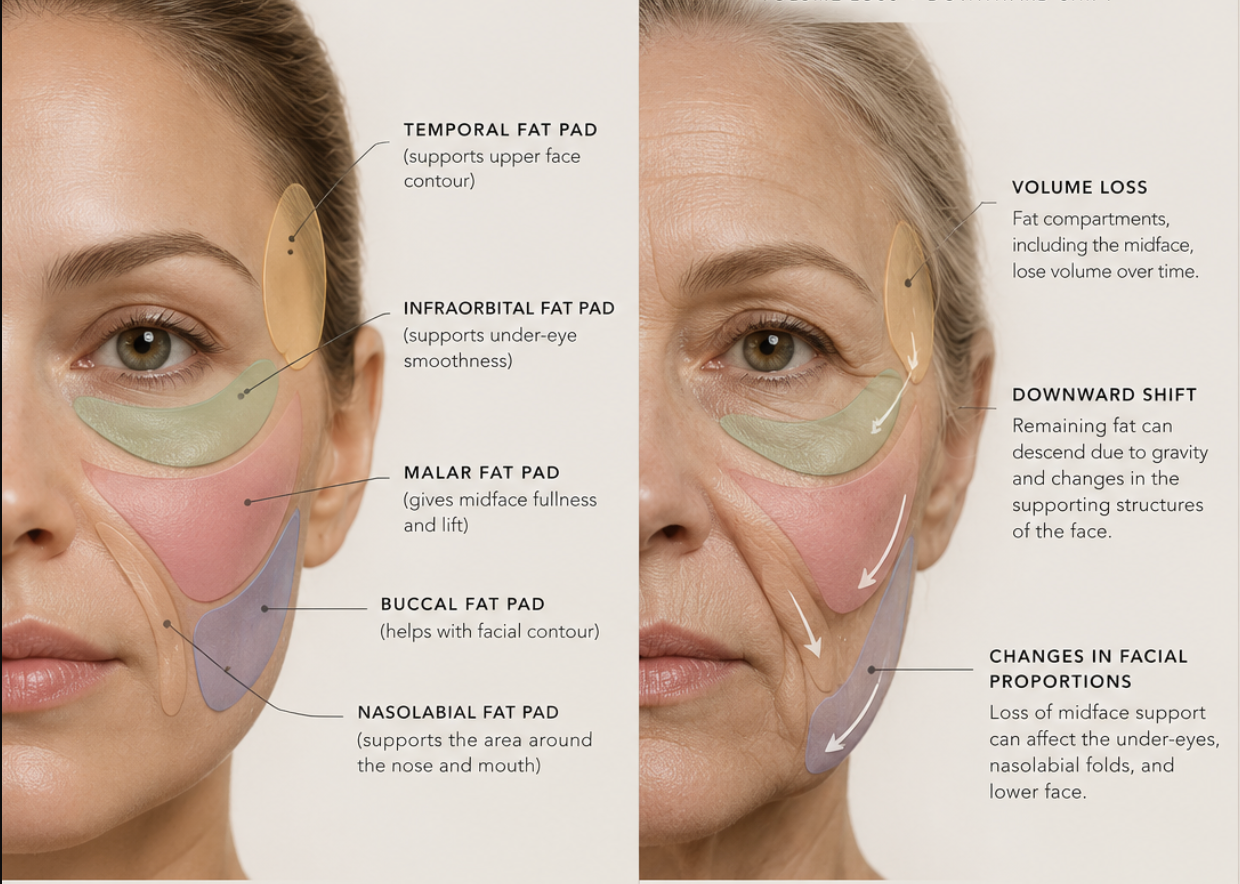
Because the midface supports so much of the surrounding face, losing cheek support can change the look of your under-eyes and the folds around your mouth. It can also make your lower face appear heavier.
Collagen, elastin, and natural hydration decline with age, and collagen loss tends to speed up around menopause. For many people over 50, that means skin quality and collagen loss become part of the picture alongside volume loss. Filler can address some volume-related concerns, but it cannot correct every issue caused by laxity, texture, or pigment. Depending on what is driving the change, your plan may include filler, a biostimulator like Sculptra or Radiesse, a skin-focused treatment, or a combination.
If your main concern is folds or heaviness lower in the face, it may surprise you that your assessment starts higher. Where you notice a change is not always where it begins, so we look at bone structure, volume, skin quality, movement, and previous treatment across the whole face before deciding where filler may help.
Cheek filler after 50 may restore midface volume, soften some shadows, and improve facial balance. The effect depends on your anatomy and where support has changed.
That can influence four main areas: cheek volume, midface shadows, nasolabial folds, and overall proportion.
Cheek filler can add support where age-related volume loss has changed your facial shape. Central and lateral placement create different effects, so treatment should follow your anatomy and goals.
Better cheek support may make nearby hollows and shadows look less pronounced. Under-eye darkness or puffiness still needs separate assessment because it may have another cause.
Midface flattening can deepen the folds beside the nose and mouth. Supporting the cheek first may soften them without filling every crease directly.
Restoring midface support can change how the lower face is perceived, but cheek filler does not reliably correct significant jowling or loose skin. Too much volume can make a heavy lower face look heavier.
Yes. Cheek filler can look natural after 50 when treatment restores proportion, respects your existing features, and avoids adding more volume than your face can carry well.
A natural result should preserve the way your face moves and the proportions that still look like you.
A natural result generally preserves:
At Park Aesthetics, we do not assume every line or hollow needs filler. Skin laxity, texture, movement, and previous filler can all change the plan.
More product does not guarantee a better outcome. Too much volume can widen the face or create excess projection, so the better plan may be staged treatment, another option, or leaving an area alone.
We consider hyaluronic acid fillers and biostimulatory injectables based on your anatomy, tissue quality, and treatment goal.
For midface rejuvenation, the products we currently use fall into two main groups: hyaluronic acid fillers such as Juvéderm and Restylane, and biostimulatory injectables such as Sculptra and Radiesse.
We currently carry Juvéderm and Restylane hyaluronic acid fillers. HA products vary in firmness, flexibility, and shape retention, so one may suit structural support better than another.
Sculptra supports gradual collagen production over time, while Radiesse contains calcium hydroxylapatite and can provide structure while stimulating collagen. At Park Aesthetics, Radiesse, used mainly for collagen stimulation, is placed in appropriate soft-tissue planes.
We plan cheek filler after 50 through the Park Personal Blueprint, a whole-face assessment of anatomy, proportions, aging patterns, movement, skin quality, previous treatment, and your goals.
The process looks at the full face, how your features relate to one another, and whether treatment should happen at once or in stages.
Because cheek changes can affect nearby features, the Park Personal Blueprint may also assess:
This helps show where treatment could create the most useful change.
Cheeks shape the middle third of the face, while the chin and jawline influence the lower third. Temple hollowing can also affect that balance, so these areas are assessed together.
Treatment can be spread across more than one appointment, giving us time to reassess how your face responds before adding more.
Before cheek filler, expect a consultation and facial assessment. Afterward, temporary swelling, tenderness, redness, or bruising may occur.
The process has two practical stages: what happens before injection and what you may see during and immediately after treatment.
Your injector should review:
Do not stop prescription medications unless your own medical provider tells you to.
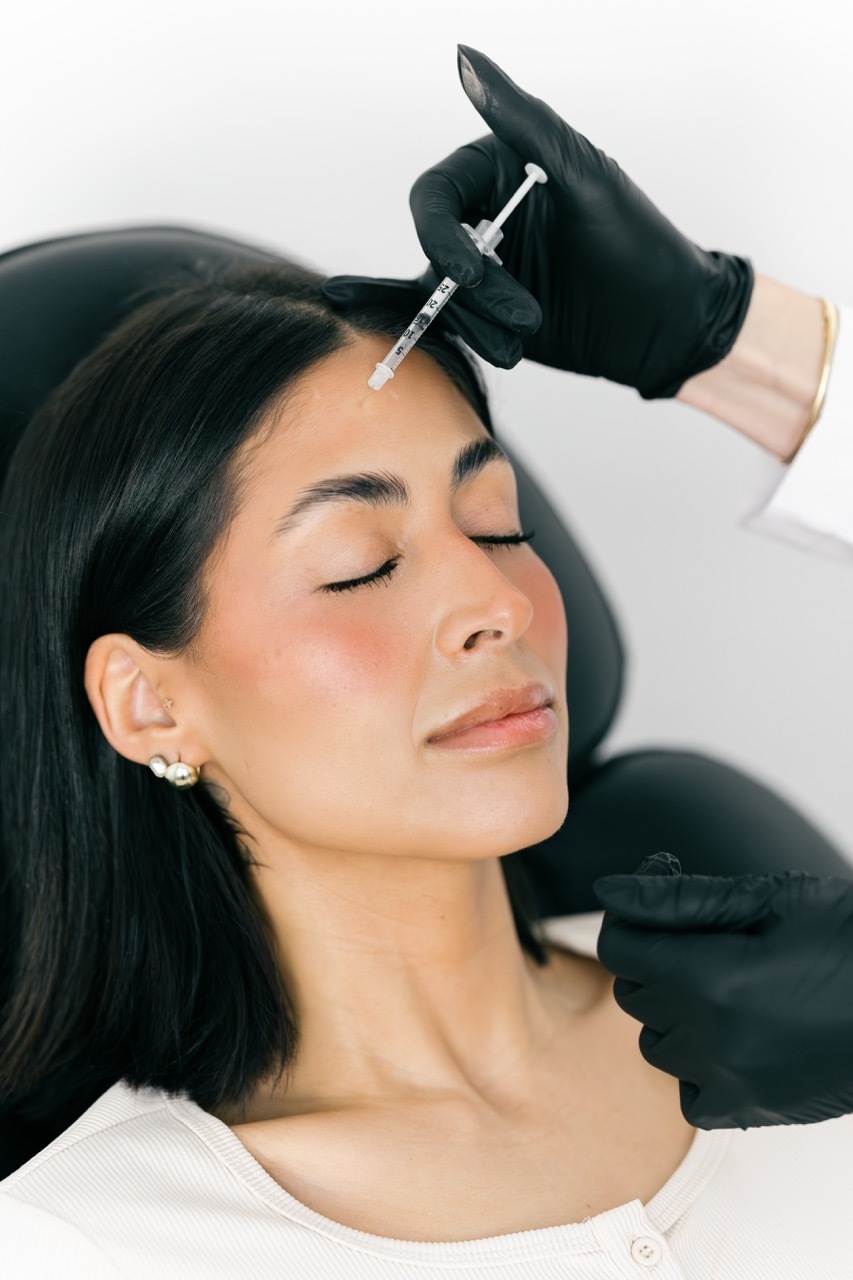
The product, amount, placement depth, and technique depend on your anatomy and plan. A needle or cannula may be used depending on the area.
Swelling can temporarily change cheek shape and symmetry, so photos taken immediately after treatment should be viewed cautiously. Later before-and-after photos usually give a better sense of the settled result.
Cheek fillers usually look more representative after early swelling settles, but timing varies by product, treatment area, and response. Biostimulatory results can develop more gradually.
The most useful comparison is between the treatment-day appearance and the later look after swelling has had time to settle.
You may see an immediate change in volume or contour, but swelling can make the cheeks look fuller or slightly uneven during early healing.
Swelling, redness, tenderness, and bruising should improve over the following days. Your follow-up is a better time to judge balance, while Sculptra or Radiesse results may continue developing over time.
No. Being over 50 does not automatically mean you need more cheek filler. The amount depends on anatomy, existing volume, prior filler, skin quality, proportions, and goals.
Two ideas are more useful than an age-based syringe estimate: why the amount varies and what we mean by a “full-face” plan.
Two people of the same age can need very different plans because their starting points may differ in:
Here, “full-face” describes the assessment behind the plan. It does not mean filling every area or reaching a preset number of syringes.
Your plan may involve one area, staged treatment, dissolving previous filler, a skin-focused option, or no filler, especially when volume loss is not the main concern.
Another treatment may fit better when the main concern is laxity, texture, pigmentation, muscle movement, or collagen loss.
Those concerns often point toward a skin-focused treatment, a neuromodulator, or a collagen-stimulating option rather than more cheek volume.
Filler can add volume and support, but it cannot reliably correct significant loose skin. Texture, pigment, thin skin, or crepiness may respond better to a skin-focused treatment.
Botox and other neuromodulators reduce muscle activity behind expression lines, while filler adds structure, shape, or volume. They can be used together when both issues contribute.
Sculptra or Radiesse may fit a plan focused on collagen stimulation and tissue quality. The choice depends on your anatomy and treatment goals.
Cheek filler can cause swelling, bruising, redness, and tenderness. Less common complications include lumps, prolonged swelling, infection, inflammatory reactions, asymmetry, and rare vascular problems.
The risks fall into two practical groups: expected temporary effects and less common complications that may need medical attention.
During early healing, you may notice:
These can temporarily change how your result looks.
Possible complications include contour irregularities, prolonged swelling, infection, inflammatory reactions, or asymmetry. Rarely, filler can interfere with blood flow and require prompt treatment.
Look for settled results, similar lighting and angles, and people with concerns like yours. For cheek filler before-and-after photos after 50, the most useful comparisons come from people with similar age-related changes photographed under consistent conditions.
A cheek-contouring result on someone in their 20s is not a useful reference for midface restoration after 50. Look for similar volume-loss patterns, facial structure, and goals.
For a fair before-and-after comparison, look for consistency in:
Later follow-up photos usually give a clearer sense of the outcome than immediate post-treatment images. Focus on facial harmony, restored support, and whether the person still looks like themselves.
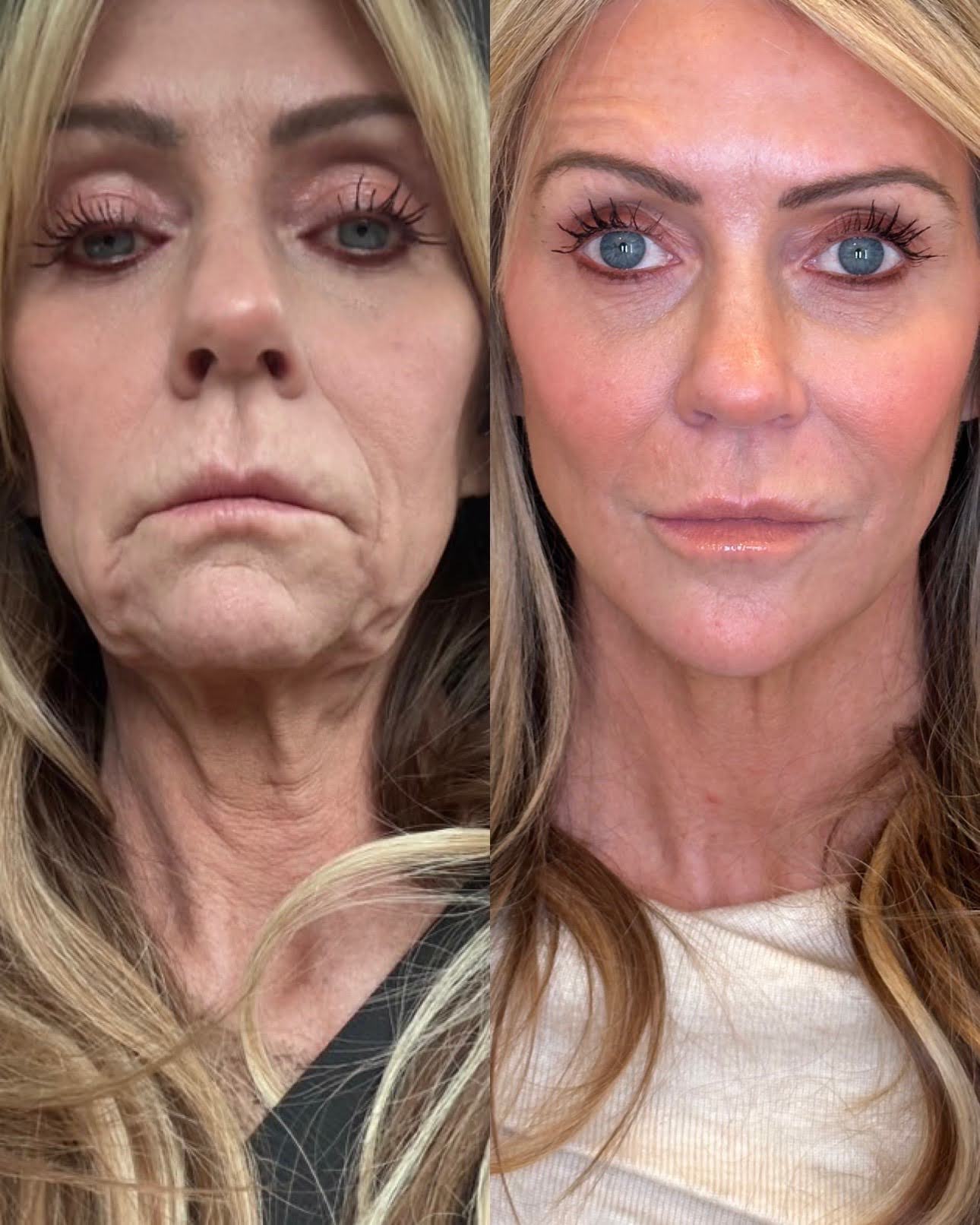
These before-and-after photos show Park Aesthetics patients over 50, each with a different starting point and a plan built around their own anatomy and goals.
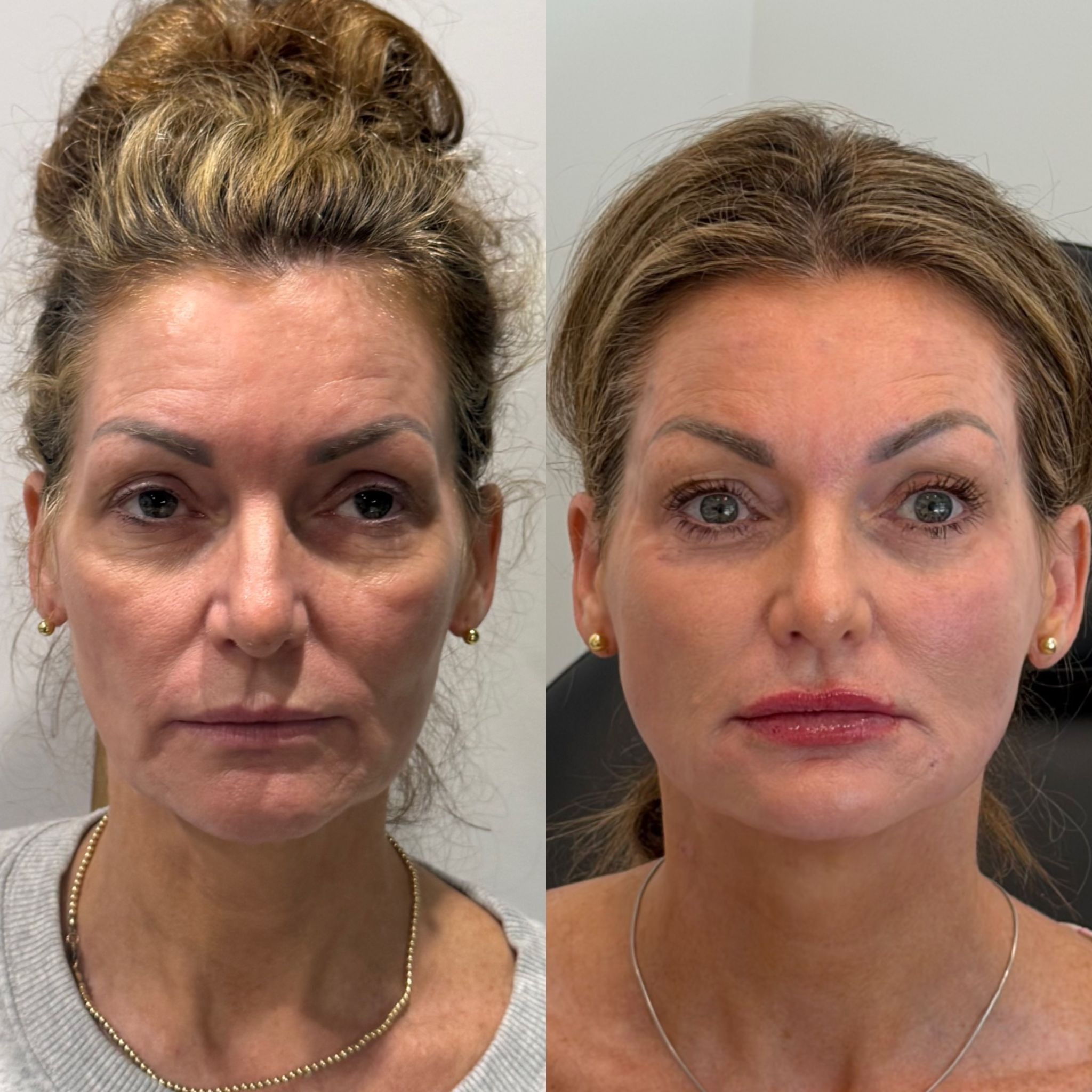
Flat cheeks set the starting point for this patient, along with shadows under her eyes and along the folds beside her mouth. With more midface support, her under-eye area looks smoother and her nasolabial folds appear softer. Her lower face also looks lighter, which reflects how changes lower in the face can begin higher up.
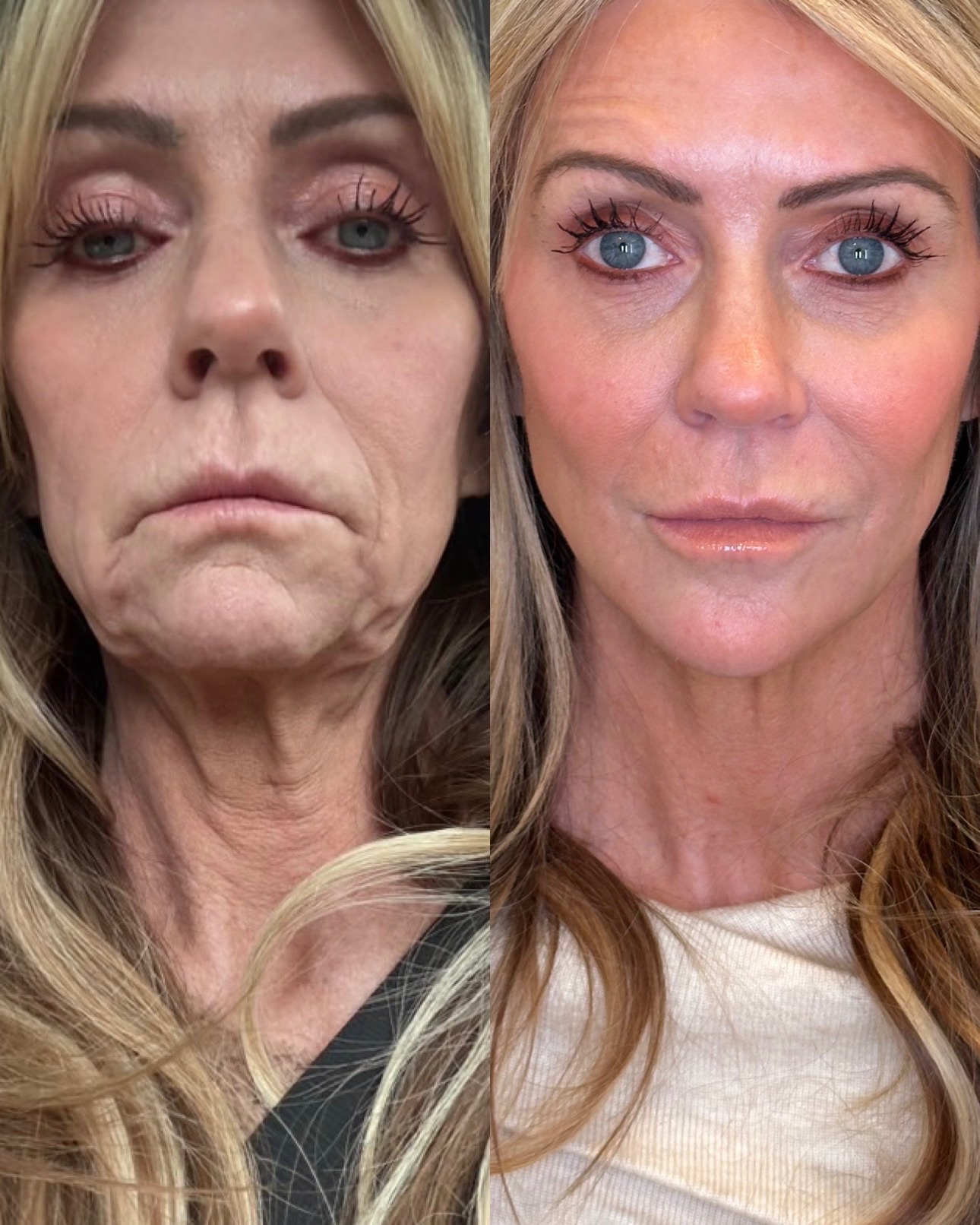
Deep folds around the mouth and heaviness along the jawline stand out most before treatment. Afterward, her midface looks fuller and those folds appear softer, giving her lower face a smoother contour. A change this broad often involves more than one area of the face, which is why a whole-face plan tends to guide results like this one.
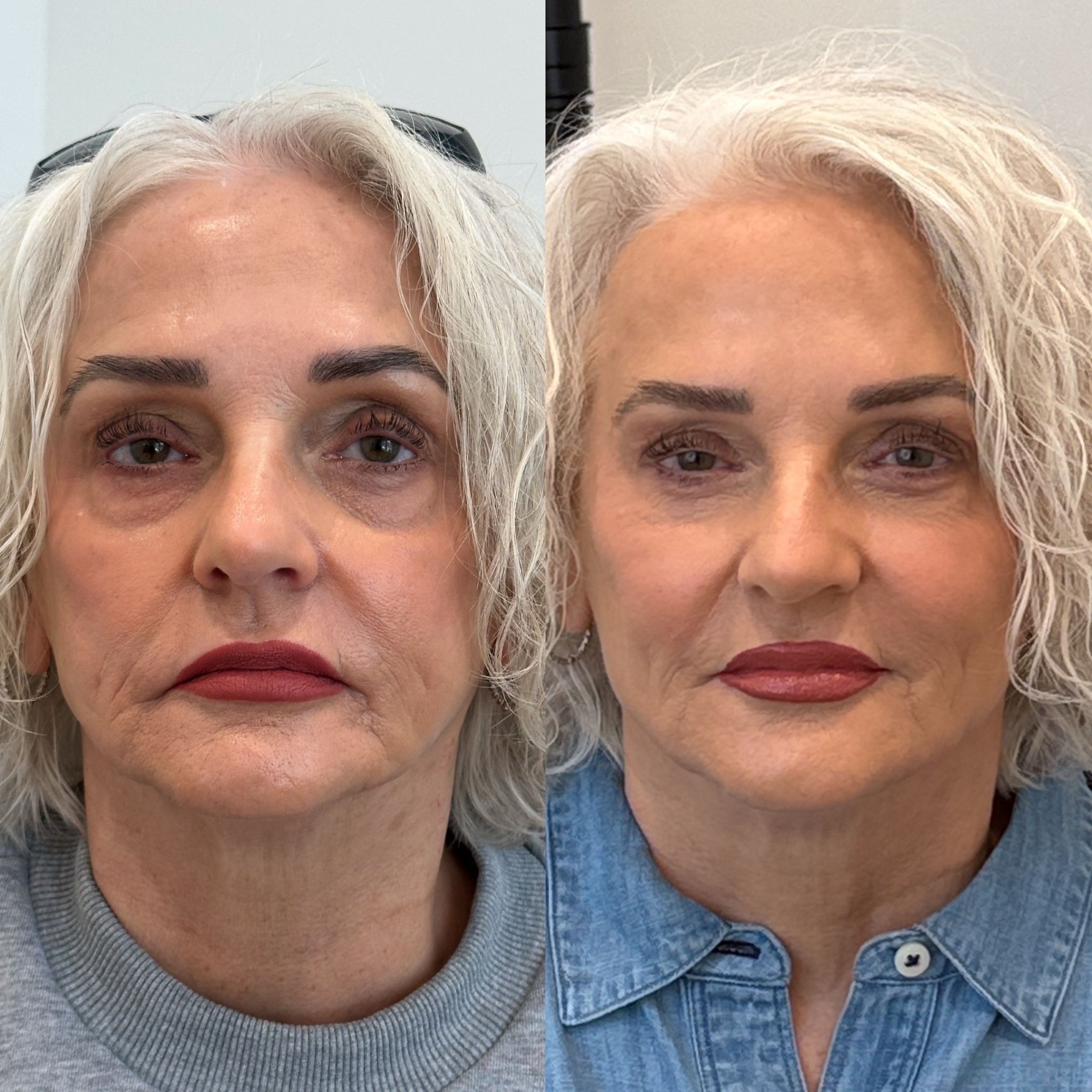
This patient's change is more subtle. At the start, her midface looks slightly flat, with visible nasolabial folds and some heaviness at the corners of the mouth. After treatment, her midface looks more rested and her folds look softer, while her expression and proportions still look like her own.
Cheek filler may be a good option after 50 when age-related volume loss is contributing to the change you see. It may be less useful when loose skin, texture, pigment, or another area is driving the concern.
At Park Aesthetics, the Park Personal Blueprint helps us assess anatomy, aging patterns, proportions, movement, skin quality, previous treatment, and goals before deciding what to prioritize.
If you have noticed changes in your cheeks or midface and are unsure if filler is the right next step, schedule a consultation with Park Aesthetics in Savannah. We can assess the full picture and build a plan without relying on a preset filler formula.
The goal is a result that fits you.
Contact us
We would love to hear from you!


.png)